"I had every document ready, and it was still refused. The reason: the history I wrote this time didn't match what I had submitted before." Our office has been hearing from more and more people refused on exactly these grounds.
Immigration may check more than your current application. If it still holds the documents filed when you first came as a student or when you later changed or renewed your status, it can compare the education and work history in those files with what you write now. A discrepancy can call the reliability of the current paperwork into question.
Drawing on three cases our office handled, this article explains how these mismatches come about, what we did after each refusal, and what to check before you file your next application.
Key conclusions
- We have seen real refusals for a student-to-work visa change, an Engineer/Specialist in Humanities/International Services renewal, and a Designated Activities-to-work visa change, all because the education or work history did not match earlier applications.
- If you are unsure what was filed in your name, you can ask immigration to disclose the personal information it holds about you. Check your current deadline first, and avoid rewriting your history from memory or guesswork.
- If an earlier document contained false information, there is legal risk even if you never knew about it. Correct the record truthfully and decide the next step with a professional.
Our cases: three refusals over mismatched history
In all three cases, one of our gyoseishoshi lawyers went to the immigration bureau with the applicant and heard the reasons for refusal in person at the counter. Details are limited to what is necessary so no one can be identified.
| Item | Case A | Case B | Case C |
|---|---|---|---|
| Application | Change from Student to Engineer/Specialist in Humanities/International Services | Renewal of Engineer/Specialist in Humanities/International Services | Change from Designated Activities to Engineer/Specialist in Humanities/International Services |
| What didn't match | Education record | Declared work history | Declared work history |
| How the reason was confirmed | Heard in person at the immigration counter, with our lawyer present | Heard in person at the immigration counter, with our lawyer present | Heard in person at the immigration counter, with our lawyer present |
| What happened next | Obtained past files through a disclosure request, returned home and reapplied | Obtained past files through a disclosure request, returned home and reapplied | Obtained past files through a disclosure request, returned home and reapplied |
Discrepancies can arise in different ways. If you misremembered dates of study or work, you will need to check different things than if an unchecked document contained inaccurate information.
If an agency prepared paperwork you never saw, check what was actually submitted before filling out the new application.
What the bureau compares your application against
Immigration may still hold documents submitted for earlier applications after granting permission. Before you file again, check the following records for discrepancies.
- The résumé (education and work history) and financial support documents from your original student Certificate of Eligibility application
- The education, work history and employers you listed in earlier change or renewal applications
- Attachments you have submitted before, such as graduation and employment certificates
- Notifications about your employer in Japan and income shown on tax certificates
Even a small difference leaves the examiner unable to tell which version is true. If a mismatch turns up with no explanation, the credibility of the whole application is called into question. In all three of our cases, the reason given at the counter was that the information submitted did not match earlier applications.
Two ways a mismatch happens
| Type | Typical example | Risk to consider |
|---|---|---|
| Your own mistake | Writing enrollment or graduation dates, start and end dates of jobs, or school and company names from memory and getting them wrong | Can lead to refusal on credibility grounds. It needs to be corrected with an explanation and documents showing the facts |
| An agency added false documents | Example: an earlier filing included a certificate for a company the applicant had never worked for | Beyond refusal, the earlier permission itself may be called into question (see below) |
Which type applies to you changes what you need to do. The starting point is always to find out exactly what was submitted.
After a refusal, go and hear the reasons first
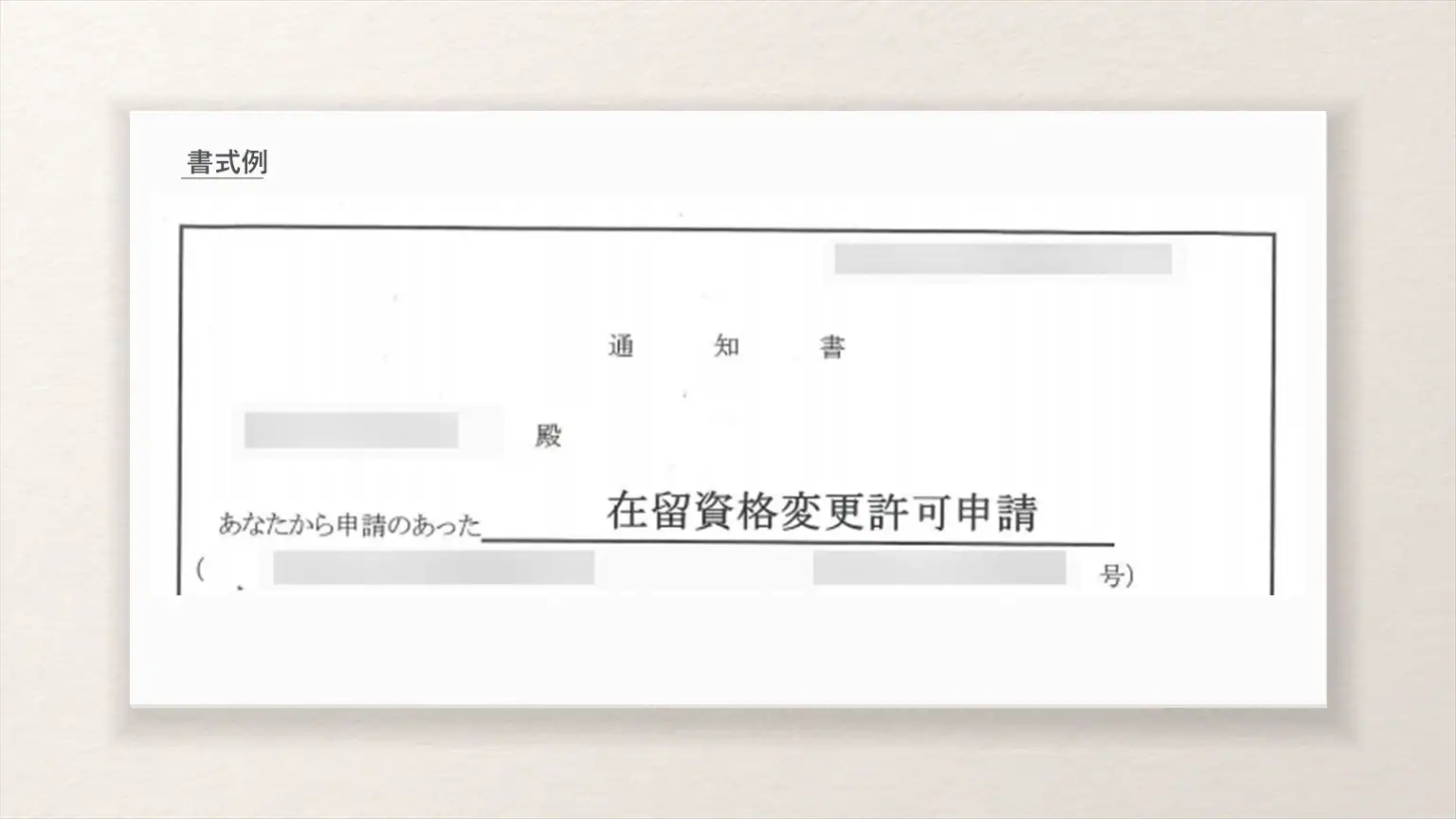
The refusal notice usually gives only a brief reason. As the applicant, you can ask the immigration counter to explain why your application was refused. In all three of our cases, this was where the mismatched history first came to light. Make sure you find out:
- Exactly which item (education, work history, dates of employment) was the problem
- Which earlier application it was compared with
- When your current permission expires and how long you have before you must leave
When you are notified of a refusal, first check your current status of residence and its expiry date. If your previous period of stay has ended and immigration separately grants Designated Activities for departure preparation, check the deadline on the actual permission documents. See 30 or 31 days to prepare for departure after a visa refusal for the difference.
A disclosure request can help you check past applications
If you are unsure what was filed in your name, you can ask immigration to disclose the personal information it still holds about you. In all three cases, we used this procedure to obtain earlier documents and check the discrepancies one by one.
- Where to apply: the regional immigration bureau that handled the procedure. For a student Certificate of Eligibility, that is the bureau where your Japanese language school or other sponsor filed it. If a branch office handled it, apply to the regional bureau that oversees that branch.
- Form: the request for disclosure of retained personal information (保有個人情報開示請求書). Be as specific as you can about which procedure and which period you want the documents from.
- Fee: ¥300 per request, paid by attaching a revenue stamp (収入印紙) to the form. Leave it uncancelled. For copies by post, include a return Letter Pack or a return envelope with the required postage.
- Identification: show your residence card or other accepted ID if you file in person. If you file by post, include copies of both sides of your ID and an official residence certificate (住民票) issued within 30 days, without your My Number. A photocopy of that certificate is insufficient. An appointed representative needs their own ID and an original power of attorney made within 30 days, plus either the principal's seal registration certificate if the registered seal was used, or copies of both sides of the principal's ID. A representative filing by post should also check the proof-of-address requirements.
- Timing: a decision is generally due within 30 days of receipt, excluding time spent correcting deficiencies in the request. The deadline can be extended. Delivery of the copies comes separately from the decision.
Disclosure covers the information immigration still holds. It may include résumés or employment certificates. Some material may no longer be held, or may be redacted or withheld.
A disclosure request does not extend your period of stay. If departure is close, arrange it while you request the files. If you expect to receive the material after leaving Japan, or cannot provide a residence certificate, check acceptable alternatives and delivery arrangements with the receiving office before filing.
How to check the files once you have them
When the disclosed documents arrive, lay them side by side with your latest application and compare item by item. For every mismatch, check whether you have documents that prove the facts.
| Item | What to check in past applications | Examples of supporting documents |
|---|---|---|
| Education | School name, enrollment and graduation dates, degree | Diploma, degree certificate, transcripts, official verification of your degree from your home country |
| Work history in Japan | Employer, start and end dates, job duties | Withholding tax slips (源泉徴収票), tax certificates, employment insurance and employees' pension records |
| Work history before Japan | Employer, period of employment, position | Employment contracts, social security records from your home country, tax records, salary bank statements |
| Gaps | How periods without work or study were described | Documents that explain what you were actually doing at the time |
Employment insurance records available through Hello Work and employees' pension records on Nenkin Net can help establish where and when you worked. Use tax certificates to support income figures, and check employment dates and duties against employment certificates, contracts and other records.
The risk if false documents were submitted
If an earlier filing contained an inaccurate employment certificate or other false information, consider how it may affect the status you already hold as well as the outcome of your new application. Article 22-4 sets out the grounds on which a current status of residence may be revoked.
These include obtaining landing permission or a comparable immigration permission by misrepresenting your background (paragraph 1, item 2). Item 3 covers cases outside items 1 and 2 where someone obtained such permission by submitting documents containing inaccurate information. The Immigration Services Agency explains that item 3 does not require intent to deceive. Saying an agency prepared the document without your knowledge does not by itself rule out revocation. If status is revoked under item 3, the departure period is up to 30 days. That period is separate from Designated Activities for departure preparation, which may be granted separately after a change or renewal is refused.
Whether revocation actually happens, and how a case is handled, depends on the individual circumstances. That is exactly why you should not decide on your own and simply file again.
Our office will not help anyone keep a false history consistent in future applications. What we do is establish the facts with you, work out how to apply truthfully, and explain the risks of doing so. In our view, that is what actually protects the applicant.
Going home and reapplying with a Certificate of Eligibility
In all three cases, the applicants returned home and proceeded with a new Certificate of Eligibility (COE) application. Applying for a COE and applying for a visa at a Japanese embassy or consulate after it is issued are separate steps. Confirm with the receiving organization who can submit the COE application in Japan.
Earlier filings can still be relevant after you leave Japan. Immigration may compare the new application with previous filings, so make the following points clear when you reapply.
- Which statements in earlier applications differed from the facts, and how
- Why they were written that way (your own error, documents prepared by an agency, and so on)
- Your true history and the documents that support it
- That everything in the new application is accurate
Keep the explanation short and factual. Showing what was wrong and what is true, with documents, works better than layers of justification. The outcome depends on the review; going home and reapplying does not guarantee approval.
If you are about to apply for a change or renewal
- Check whether you kept copies of what you filed as a student and in your last application. If you don't have them or aren't sure what they say, request disclosure before you apply
- Don't fill in education and work history from memory. Check it against your diplomas, employment certificates and insurance or pension records
- Always read any document an agency or school prepares for you before it is submitted, and keep a copy
- If you find an error in an earlier application, don't just quietly get it right this time. Attach an explanation of the discrepancy
- If you suspect false documents may have been submitted in the past, talk to a professional before you apply
Frequently Asked Questions
Can an incorrect graduation date lead to a refusal?
It can. If you find a mistake, set out what was written before and the correct date, and support the explanation with a graduation certificate or other records.
The agency made that document without telling me. I never saw it.
If an inaccurate document was used to obtain landing permission or a comparable permission, Article 22-4(1)(iii) may apply. It does not require intent. First check what was actually filed and which permission it related to, then consider how to explain the circumstances, including what you knew at the time.
Can I make the disclosure request myself, or have someone do it for me?
You can file in person or by post. An appointed representative may also file, but needs identification documents for the representative and principal in addition to the power of attorney. The fee is ¥300 per request. See the disclosure section above for the documents to prepare.
After a refusal, can I reapply while I'm still in Japan?
It depends on your remaining period of stay and why you were refused. If you cannot gather the evidence in Japan in time, one option is to leave before the deadline and proceed with a COE application, as in our three cases.
If I go home and reapply, does my earlier application stop mattering?
Immigration may still check earlier filings. If there is a discrepancy, prepare to explain why it arose and to support the correct history with evidence.
Not sure what you wrote before? Talk to us before you apply
No matter how carefully you prepare an application, you can't avoid a history mismatch without checking your past record. We can go with you to hear the reasons for a refusal, handle the disclosure request, compare the files item by item, and prepare your new application. We work directly in English, Japanese and Chinese. See our residence status application support, then reach us through our contact page.
Official sources checked on November 7, 2026. The cases are based on three applications our office handled, with details limited so that no one can be identified. This article does not guarantee the outcome of any application or indicate whether a residence status will be revoked.
Official sources consultedFor details, check the latest guidance from the relevant authority.
Not sure what you wrote in past applications?
We can go with you to hear the reasons for refusal, handle the disclosure request, compare your past files and prepare your new application. Your first consultation is free.